













Microporous
Turning bar
Non-contact web handling
of sensitive substrates.
Contactless
web guiding
High-Precision
Air Turn Bars
Transporting and Turning
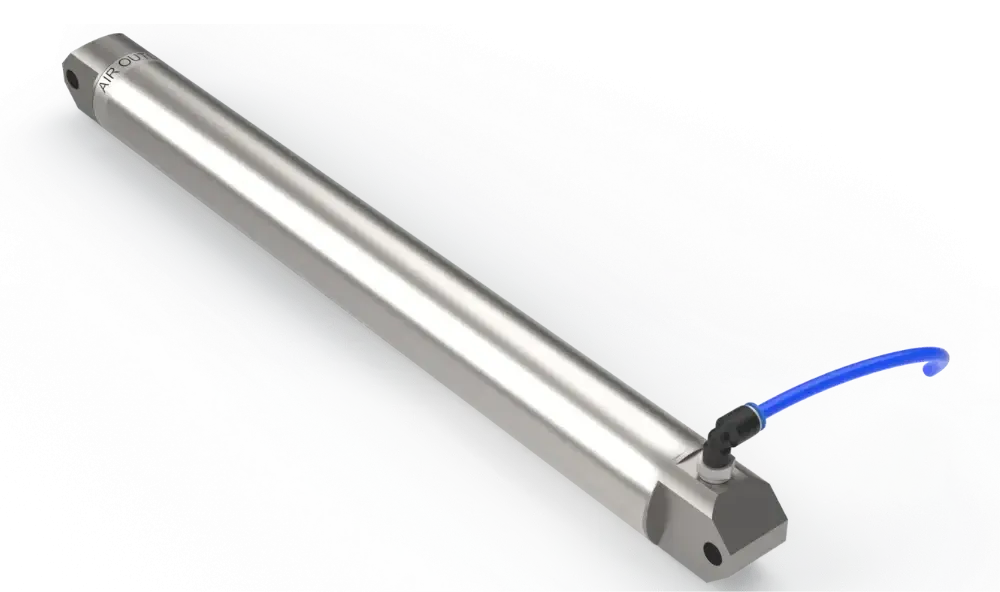
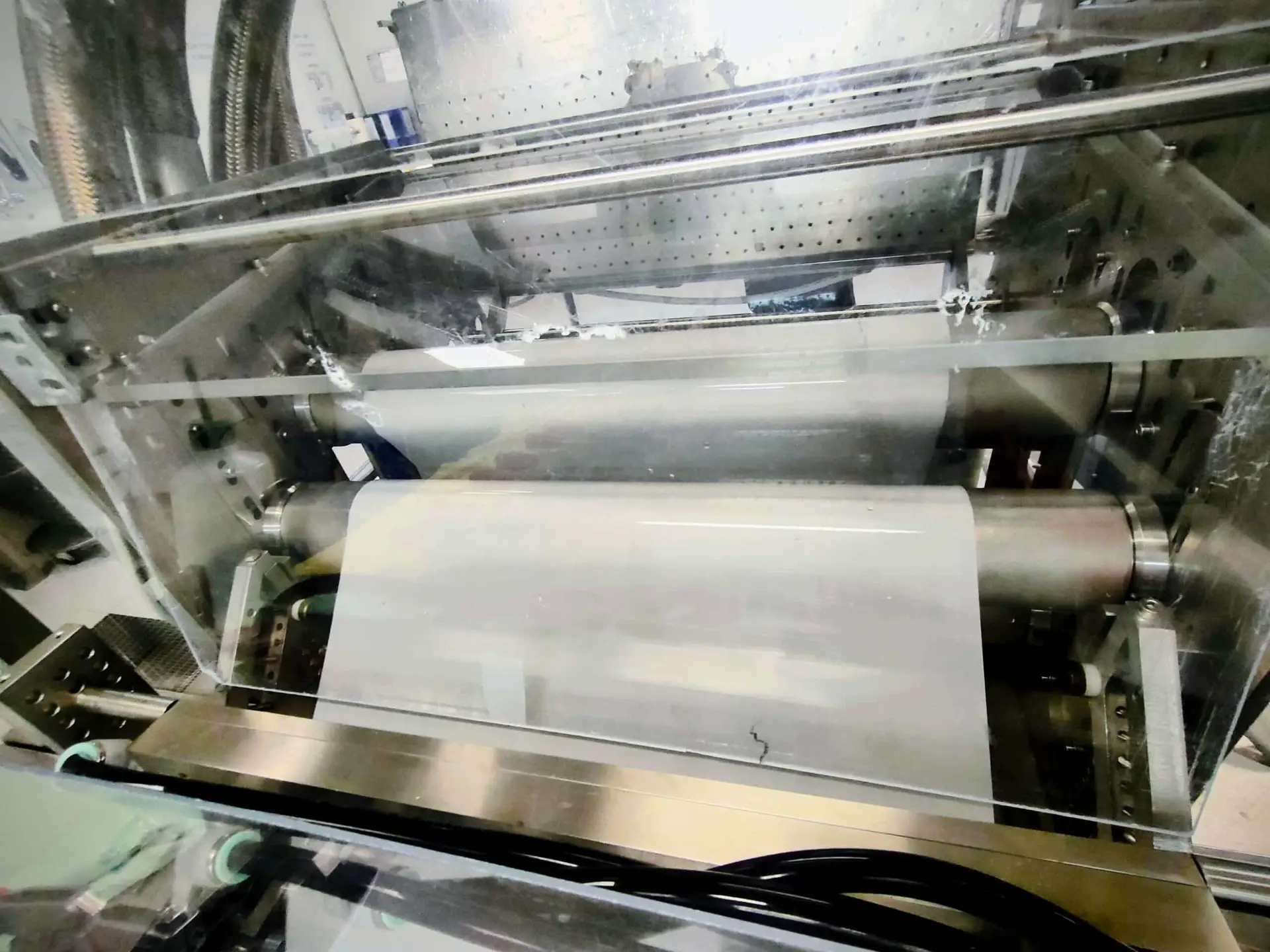
Printum’s microporous turning bars are used for contact-free guiding, deflecting, turning and transporting particularly sensitive materials such as film, paper or metal.
Scratch-sensitive, fragile and self-adhesive flexible materials cannot be guided over standard rollers, but must be guided without contact. Our microporous turning bars create a homogeneous air cushion over which your web will float without contact.
Advantages
Gentle on materials and efficient.
- Drastically reduced compressed air consumption ➔ compared to drilled rods
- Correspondingly almost noiseless
- No heat development on the surface, as there is no contact
- No chemical non-stick agents necessary
- Customized to your machine or module
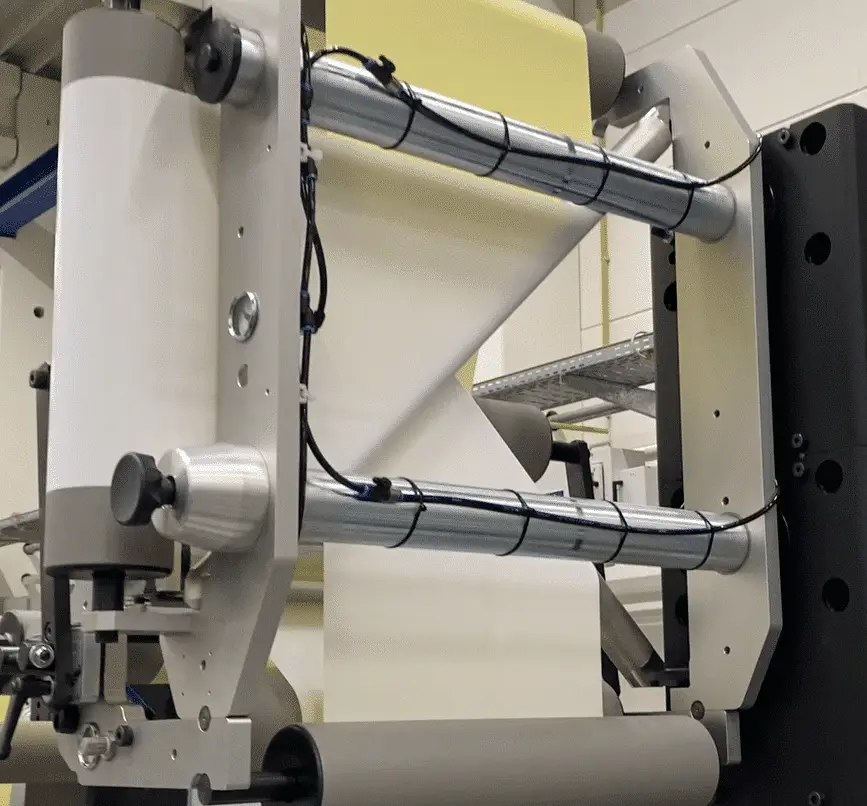
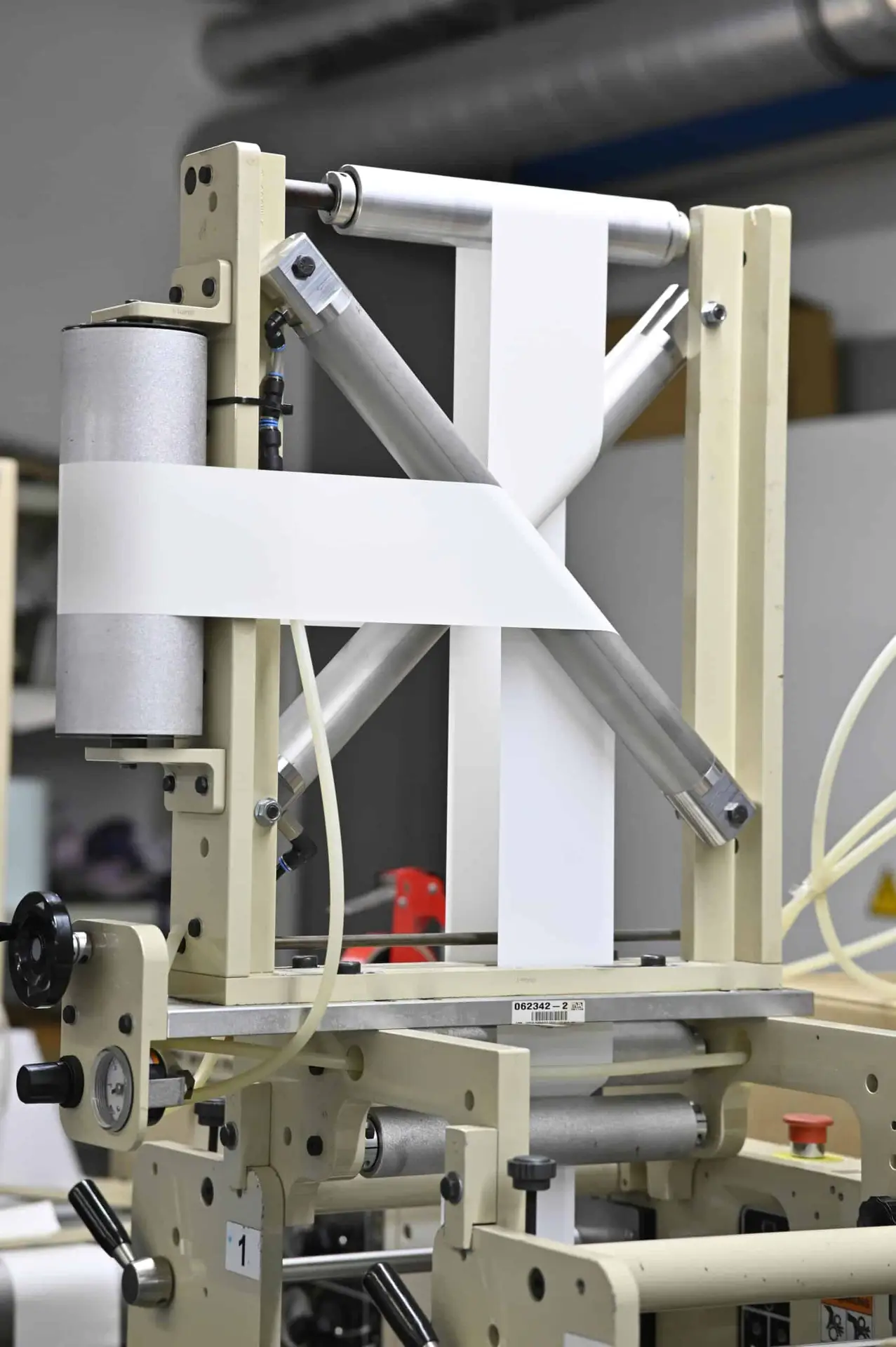
- Easy integration even in tight installation spaces and in applications such as the multilayer kit or our turning crosses.
Specifications
Technical data
- Stainless steel base body
- Available in lengths up to 1,200 mm
- Diameter up to 150 mm
- Air outlet 10 to 360 degrees – depending on the desired wrap angle
- Equipped with individual end heads
- Requires compressed air
Application
Label Printing & Industrial Converting
The real alternative to drilled turning rollers!
Our microporous turning bars replace conventional rollers with drilled air holes and can be found in many label & tape converting systems worldwide. This web guiding solution is particularly economical and ideal for highly adhesive, freshly printed or particularly sensitive webs.
FAQ - Multilayer-kit
You have questions?
What is a microporous turning bar?
A microporous turning bar, also known as an air turn bar, air turning bar or contactless turning bar, is a web-handling component that guides, turns and deflects a moving web without any physical contact. Instead of a solid or drilled roller, the web floats on a homogeneous air cushion. It is the economical alternative to conventional drilled turning rollers for sensitive materials.
How does contact-free web guiding work?
The stainless steel body has a microporous surface through which compressed air escapes evenly across the whole bar. This creates a stable, homogeneous air cushion, so the web floats over the bar without ever touching it. Because there is no contact, there is no friction, no scratching and no marking of the material, which is the core principle of contactless web guiding.
Which materials can a microporous turning bar handle?
It is designed for particularly sensitive and demanding webs, including film, foil, paper, thin metal, membranes and self-adhesive or freshly printed materials. Scratch-sensitive, fragile or tacky substrates that cannot run over standard rollers can be guided reliably and gently on the air cushion.
What is the difference between a microporous turning bar and a drilled turning bar?
Both work with compressed air, but a microporous bar releases air evenly across its entire surface instead of through a limited number of drilled holes. The practical advantages are a drastically reduced compressed air consumption, near-silent operation, no heat build-up on the surface and no need for chemical non-stick agents. This makes the microporous turning bar the real, more economical alternative to drilled turning rollers.
Which industries use microporous turning bars?
They are used across virtually all web-processing and converting industries. Typical fields are label converting, tape converting, flexible packaging, battery electrode handling, coatings, non-woven, filtration and medical applications such as wound care and transdermal patches. Anywhere a sensitive web has to be turned or deflected without contact, the microporous turning bar is a fit.
What are the technical specifications?
The turning bar has a stainless steel base body and is available in lengths of up to 1,200 mm and diameters of up to 150 mm. The air outlet can be configured from 10 to 360 degrees depending on the required wrap angle, and each bar is fitted with individual end heads. It requires a compressed air supply to build the air cushion.
Can the microporous turning bar be customized and integrated into my machine?
Yes. Each bar is customized to your machine or module, including the length, diameter and wrap angle. Thanks to its compact design it can be integrated even in tight installation spaces, and it is also used as a building block in larger assemblies such as turning crosses or the Multilayer Kit for multilayer label production.
How much compressed air does a microporous turning bar need?
It needs a standard compressed air supply, but consumes significantly less air than a conventional drilled turning bar because the porous surface distributes air far more efficiently. Lower air consumption directly reduces energy costs, which is one of the main reasons converters replace drilled rollers with microporous turning bars.
Why is contact-free turning necessary for sensitive webs?
Freshly printed, coated, adhesive or scratch-sensitive webs are damaged the moment they touch a hard surface, causing scratches, smudging or adhesion. A microporous turning bar removes that risk entirely by keeping the web on an air cushion, which protects product quality and reduces waste and downtime.
Contact
Do you want to replace drilled rollers and produce more economically?
We will be happy to answer your questions about the microporous turning rod.